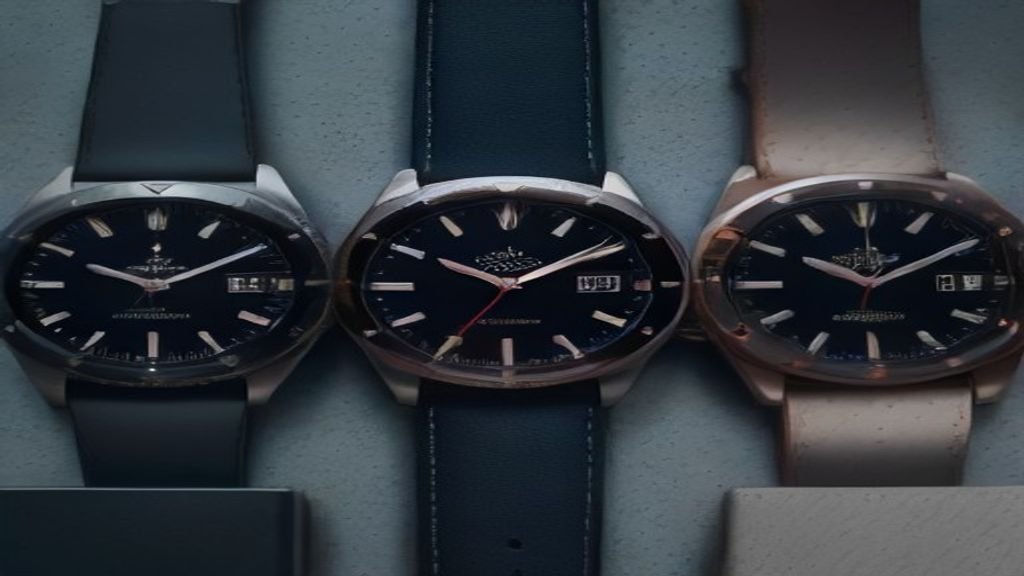
If you are weighing rolex submariner vs gmt master ii, and glancing at the Explorer while you do it, the answer depends less on specifications than on what your bezel does for you. All three are robust, accurate and built to be worn hard. The differences that matter are function, proportion and how hard each is to actually buy.
The quick version: the Submariner is the default and the most versatile. The GMT-Master II adds a second time zone and suits anyone who travels or works across regions. The Explorer is the quietest, smallest and cheapest, and it never asks for attention.
Where Each One Came From
The Submariner arrived in the early 1950s as a purpose-built dive watch: rotating timing bezel, high water resistance, legible dial. It became the template every other dive watch copied and has changed remarkably little in outline since.
The GMT-Master followed a couple of years later, developed for airline pilots. The original read a second zone off a 24-hour hand and a rotating 24-hour bezel. The GMT-Master II, from the 1980s, made the local hour hand independently adjustable — the feature that turned it from a clever display into a genuine travel tool.
The Explorer also dates to the early 1950s, tied to high-altitude mountaineering. No complication beyond time, no rotating bezel, no date. That restraint is the whole point.
Rolex Submariner vs GMT-Master II vs Explorer: Spec Comparison
| Submariner | GMT-Master II | Explorer | |
|---|---|---|---|
| Case size | 41mm | 40mm | 36mm and 40mm |
| Water resistance | 300m | 100m | 100m |
| Bezel | Unidirectional 60-minute ceramic | Bidirectional 24-hour ceramic | Fixed smooth |
| Complication | Date (or no-date) | Second time zone, date | Time only |
| Bracelet | Oyster with Glidelock | Oyster or Jubilee | Oyster with Easylink |
| Movement family | 32-series | 32-series GMT caliber | 32-series time-only |
| Power reserve | Around 70 hours | Around 70 hours | Around 70 hours |
| Approx. US retail | Roughly $9,500–$11,500 | Roughly $11,000–$12,000 | Roughly $7,500–$8,500 |
Prices are approximate for steel models in 2026 and vary by configuration. Verify current figures at the point of purchase.
Size and Wearability
The Submariner sits at 41mm with a fairly thick case, driven by the depth rating. It wears larger than the GMT despite a single millimetre of difference, mostly because of the wide bezel and extra height.
The GMT-Master II at 40mm is slimmer and slightly more elegant, particularly on a Jubilee bracelet. It is the easiest of the three to wear with a jacket.
The Explorer is the outlier. The 36mm is genuinely compact by modern standards and suits smaller wrists beautifully; the 40mm splits the difference. Both slide under a cuff without thinking about it.
Bezel Function in Real Use
- Submariner — a unidirectional 60-minute bezel. It turns one way only, so a knock can shorten your reading, never lengthen it. Good for parking meters, cooking, workouts, anything you time.
- GMT-Master II — a bidirectional 24-hour bezel. With the 24-hour hand and independent local hour hand, it gives you two or even three zones at once. Genuinely useful with overseas colleagues.
- Explorer — no bezel function. Nothing to knock, nothing to reset, nothing to explain.
Be honest here. A dive bezel you never rotate is decoration; a GMT bezel used weekly is a tool.
Dials, Bracelets and Configurations
The Submariner comes in steel, two-tone and solid gold, with black, blue and green dial and bezel combinations depending on metal, plus a no-date variant many people prefer for its cleaner dial.
The GMT-Master II is the colour-forward one. Its two-tone bezel combinations have picked up widely used nicknames, and colour choice drives desirability more here than on any other sports Rolex. It is also the only one of the three offered on a Jubilee bracelet from the factory.
The Explorer keeps it simple: black dial, applied numerals at three, six and nine, Mercedes hands, Oyster bracelet. A two-tone 36mm version exists for anyone who wants a little more presence.
Availability, Pricing and Secondary Market Behaviour
Supply at authorised dealers remains tight across all three, but not equally.
- GMT-Master II — hardest to get in the popular bezel colours. Certain configurations consistently trade above retail, sometimes substantially.
- Submariner — high demand, larger production. Secondary prices generally sit near or moderately above retail depending on reference and dial.
- Explorer — the easiest to buy. Secondary prices often hover close to retail, sometimes below it for the 36mm.
Grey market dealers will have all three in stock at a markup over list, the size of that markup tracking demand. Check the major secondary marketplaces to calibrate what a fair number looks like before you talk to anyone. Treat any figure you read as a snapshot. Some seller provide Fake Rolex, you may also try this out.
Two Adjacent Options Worth Knowing
Explorer II
A 42mm case, a fixed 24-hour bezel and an orange 24-hour hand, with a black or white dial. Second-time-zone function in a larger, more angular package, and generally easier to buy than a GMT-Master II. If you want the dual-time capability but not the coloured bezel, this is your watch.
Sea-Dweller
A 43mm professional diver with a far deeper rating than the Submariner and a helium escape valve. Thicker, heavier, and it wears like a serious tool. Choose it if you want maximum robustness and do not mind the bulk.
Who Each Watch Suits
- Buy the Submariner if you want one watch that handles a suit, a beach and a boardroom without comment.
- Buy the GMT-Master II if you cross time zones, or want the most distinctive option and will wait or pay a premium.
- Buy the Explorer if you value restraint, have a smaller wrist, or want the lowest entry point into a steel professional model.
Key Takeaways
- The deciding factor across these three is timing bezel versus second time zone.
- The Submariner leads on water resistance at 300m; the other two sit at 100m, plenty for swimming.
- The Explorer is the smallest, thinnest, cheapest and easiest to buy.
- GMT-Master II colour configurations drive the largest secondary premiums.
- The Explorer II offers GMT function with better availability and a larger case.
- Confirm all approximate prices at the time of purchase, as they move regularly.
Frequently Asked Questions
Is the Submariner or GMT-Master II a better first Rolex?
The Submariner is the safer first purchase — more versatile, slightly cheaper and easier to find at a dealer. The GMT-Master II is better if you actually track a second time zone or strongly prefer its look. Neither is a mistake; the Submariner just involves less waiting.
Can you swim with a GMT-Master II or Explorer?
Yes. Both are rated to 100m, which covers swimming, showering and snorkelling. Neither is meant for serious diving — that is what the Submariner and Sea-Dweller are for. Keep the crown screwed down and have the seals checked at service.
Why is the Explorer cheaper than the other two?
Less complication, a smaller case, a simpler bezel and lower production cost all feed the price. It also carries less market hype, keeping secondary prices closer to retail. That makes it the best value of the three in pure horological terms.
Which holds its value best?
Historically the GMT-Master II in the most sought-after bezel combinations has shown the strongest secondary market behaviour, followed by the Submariner. The Explorer holds value steadily with less upside. Past behaviour is not a forecast, and buying a watch as an investment is a poor plan.
Should I consider the Explorer II instead of a GMT-Master II?
If you want dual-time function without the wait, yes. The Explorer II is larger at 42mm and reads as more of a tool watch, with a fixed rather than rotating bezel. Try both on, because the size difference is significant.
Final Thoughts
Comparing rolex submariner vs gmt master ii ends with a question about function, not prestige. Rotating timing bezel or second time zone? If neither excites you, the Explorer is quietly the most sensible of the three and the least trouble to buy. Try all three on the same afternoon, ignore what the internet says is desirable, and pick the one you keep looking at.



Leave a Reply