
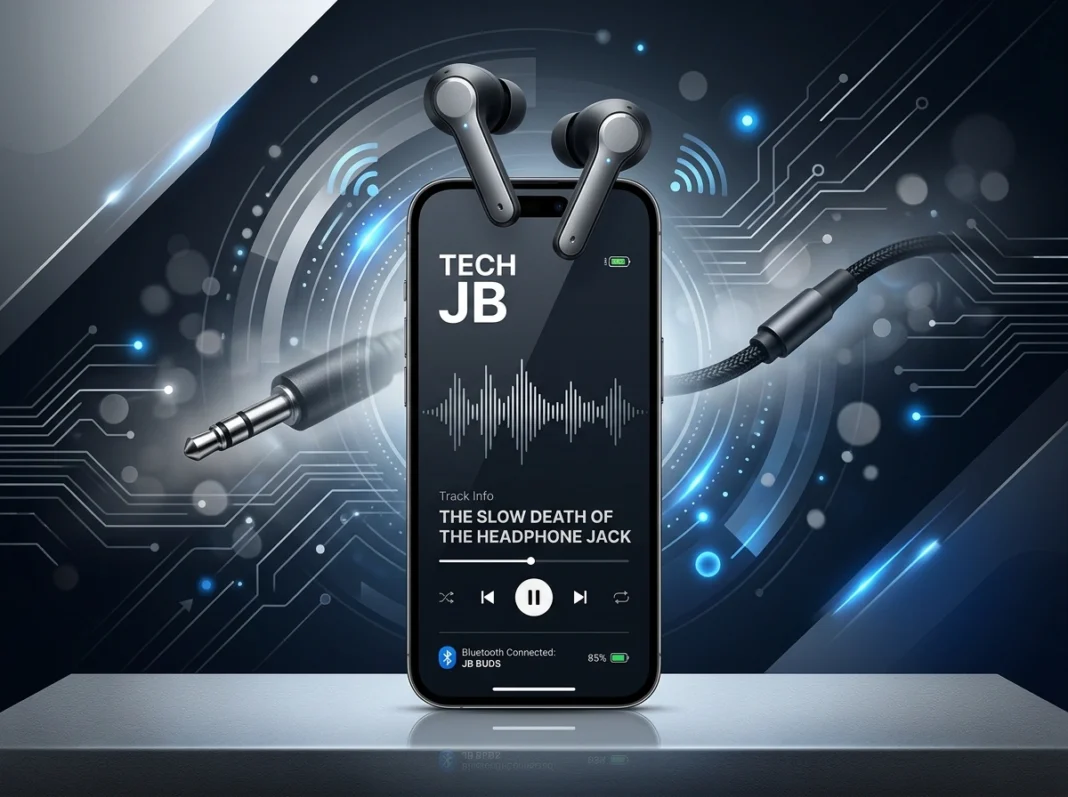

For decades, the 3.5mm headphone jack was a fixture on nearly every audio device. It sat on phones, laptops, MP3 players, and tablets without anyone giving it a second thought. Then, almost overnight, it started disappearing. What once felt permanent now seems like a relic of a bygone era. The transition wasn’t loud or dramatic, but it reshaped how billions of people listen to music, take calls, and consume media.
Understanding why this happened—and what it means for the future—reveals a fascinating story about technology, business, and consumer behavior. Tech analysts like the team at teck jb have tracked this shift closely, pointing out the deeper forces at play long before the headphone jack vanished from flagship devices.
A Brief History of the 3.5mm Jack
The headphone jack has roots stretching back more than a century. The original quarter-inch version dates to the 1870s, used in telephone switchboards. The smaller 3.5mm variant became standard in portable audio devices during the 1960s and stuck around for an impressively long time.
Its appeal was simple. It worked everywhere. You could plug almost any pair of headphones into almost any device and expect sound. There were no batteries to charge, no pairing menus, and no compatibility headaches. For an industry that loves change, this universal standard remained remarkably stable.
That stability is exactly what made its removal so striking.
The iPhone 7 Moment
In 2016, Apple released the iPhone 7 without a headphone jack. The company framed the decision as an act of “courage,” a phrase that drew plenty of mockery at the time. Critics accused Apple of forcing customers toward expensive wireless earbuds and dongles.
But the move was calculated. Apple had several reasons:
- Space savings: Removing the jack freed up internal room for larger batteries and other components.
- Water resistance: Fewer openings made it easier to seal devices against moisture.
- Pushing wireless: Apple had just acquired Beats and was about to launch AirPods, its own wireless earbuds.
The reaction was swift and divided. Some users felt betrayed. Others shrugged and adapted. Either way, Apple’s massive influence meant the rest of the industry took notice.
Industry-Wide Adoption
Once Apple set the precedent, the dominoes began to fall. Within a few years, major Android manufacturers followed suit. Samsung, which had openly mocked Apple for dropping the jack, removed it from its own flagship phones by 2019. Google, OnePlus, and others made the same call.
The pattern was predictable. A bold move by a market leader gives smaller players cover to make unpopular decisions. Manufacturers could now point to a broader trend rather than shouldering the blame alone.
This is where analysts at teck jb made a sharp observation. The headphone jack didn’t die because consumers demanded its removal. It died because the industry found it convenient to remove. The shift was driven from the top down, not the bottom up.
The Business Case Behind the Change
There’s a commercial angle that often gets overlooked. Removing the jack created a new accessories market almost overnight. Suddenly, customers needed:
- Wireless earbuds or headphones
- USB-C or Lightning adapters
- New charging cases and cables
For companies selling audio hardware, this was a windfall. The wireless earbud market exploded, growing into a multi-billion-dollar segment within just a few years. What looked like a controversial product decision turned out to be a savvy business strategy.
How Consumers Reacted
Consumer reactions moved through distinct phases. At first, there was genuine frustration. People worried about charging two devices instead of one. They complained about losing tiny adapters and dealing with Bluetooth connection drops.
Then came reluctant acceptance. As wireless earbuds improved, many of the early complaints faded. Battery life got better. Pairing became more reliable. Sound quality reached a point where most casual listeners couldn’t tell the difference.
Finally, for younger users especially, wireless became the default expectation. A growing number of people have never owned a phone with a headphone jack. To them, plugging in headphones feels as outdated as using a corded telephone.
This generational shift matters. Technology adoption often follows this curve, where resistance gives way to habit and habit hardens into preference.
The Rise of Wireless Audio
The death of the headphone jack coincided neatly with major improvements in Bluetooth technology. Earlier wireless audio suffered from latency, poor range, and inconsistent quality. Newer Bluetooth standards fixed many of these issues.
Several developments accelerated the wireless takeover:
- Better codecs: Technologies like aptX and LDAC improved sound quality over Bluetooth.
- Lower latency: Reduced lag made wireless viable for gaming and video.
- Smarter features: Active noise cancellation, transparency modes, and automatic device switching added real value.
- Falling prices: Quality wireless earbuds became affordable for the mass market.
These advances did more than replace the jack. They redefined what people expected from personal audio. Features that were once luxuries became standard, and the convenience of going truly cable-free won over skeptics.
What the Critics Got Right—and Wrong
It would be unfair to dismiss the critics entirely. Some of their concerns were valid. Wireless earbuds contribute to electronic waste, since their built-in batteries degrade and the devices are hard to repair. Audiophiles still argue that a good wired connection delivers superior sound without compression.
There’s also the issue of choice. Removing the jack stripped away an option that cost nothing to include. For people who valued simplicity and reliability, that loss was real.
Yet the broader prediction—that consumers would refuse to adapt—proved wrong. People grumbled, then moved on. The convenience of wireless ultimately outweighed the inconvenience of the transition for most users.
Implications for the Future of Audio
The disappearance of the headphone jack signals a larger direction in consumer technology. Manufacturers are steadily removing physical ports and buttons in favor of wireless and software-based solutions. Some companies have even experimented with phones that have no ports at all, relying entirely on wireless charging and data transfer.
This trend raises important questions. As devices become more sealed and integrated, repairability suffers. Users have less control over their hardware and more dependence on proprietary ecosystems. The jack’s removal was an early example of this tradeoff between sleek design and user flexibility.
Looking ahead, audio technology will likely keep moving toward seamless, intelligent experiences. Spatial audio, adaptive sound, and AI-driven features point to a future where listening adapts to the user in real time. The humble headphone jack simply had no place in that vision.
Why This Story Still Matters
The slow death of the headphone jack is more than a footnote in tech history. It’s a case study in how industries manage change. It shows how a single influential decision can ripple across an entire market, how businesses turn disruption into opportunity, and how consumer habits evolve faster than people expect.
The analysts who saw this coming understood something fundamental. Technology rarely changes because users ask for it. It changes when companies decide the benefits—commercial, technical, or strategic—outweigh the backlash. The headphone jack didn’t fail because it was bad. It was simply standing in the way of where the industry wanted to go.
Conclusion
The 3.5mm headphone jack served us faithfully for generations. Its removal felt jarring at first, sparking genuine frustration and plenty of memes. But the transition revealed deeper truths about how technology evolves and how quickly people adapt to new norms.
What the sharpest observers got right was the bigger picture. This was never just about a small round port. It was about the shift toward wireless living, the growth of new markets, and the constant tension between convenience and control. The jack’s quiet exit marked the beginning of an era defined by seamless, cable-free experiences.
As we look toward the future of audio, the lesson is clear. Change in technology is rarely about the feature being removed. It’s about the vision being built in its place.